The system of education varies from country to country. The traditional educational system is mostly the same in every country and in most of them it will be mandatory for every person above defined age to complete a certain level of it. This kind of traditional educational system is usually divided into three or four stages and it is based on teaching in person. The higher the educational institution is, the more likely it is to involve on-line teaching methods. In any case, the level for mandatory education which every citizen should complete is fixed in advance while the further education is provided for those who want to go forward with it and/or who fulfill the criteria. Educational institutions discussed over here will be divided according the the system of education that is adopted in most of the countries around the world.
The first institution people need to go through is called as nursery and kindergarten. Nursery is ment for children who are still not able to take any care of themselves and kindergarten for little children that can take almost full care of themselves, who are also able to interact with other children but need to be supervised. At around the age of six, children go to preschool. Preschool can be mandatory and its purpose is to prepare a child for the following levels of education. Children will usually learn basic simple things like writing, reading and counting numbers over there. Sometimes a nursery, kindergarten and preschool can be combined under one name, usually kindergarten or preschool, and offer all these activities.
 |
| Kidergarten - a first step into educational system |
|
After nursery, kindergarten and preschool, a child goes to primary and secondary school. Primary school will usually be completed by the age of ten or eleven while secondary at the age of 15 or 16. At these stages children gain knowledge through specially designed programs for each of the subject they learn about and are introduced to oral and written examinations along with the grades of academic achievements. These levels provide a basic knowledge and skills that are necessary to be able to continue with the education in any direction onwards.
High school can be considered of as a third segment of educational system. Going to high school is not mandatory in every country but in many it is. High schools are first specialised institutions people encounter during their schooling and their purpose is to start shaping one's professional knowledge regarding the future potential job position. There are usually two types of high school - one being completely specialised for a certain profession and the second one offering wider number of subjects among which a certain number should be chosen and completed. After completing high school education, one gets a confirmation about it in the form of a diploma or certificate.
 |
| High school - a first step into professional environment |
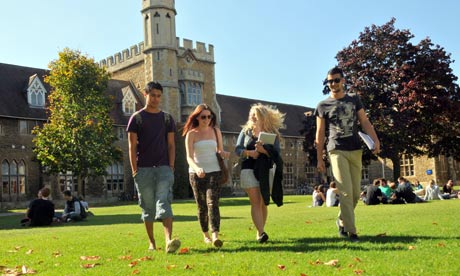
The last segment consists of institutions of higher education and they are completely optional. These are the institutions where one can award academic degrees and are usually referred to as college and university. Both of these terms interfere quite often, however, there is a difference in their meanings. A college is an institution that can be a part of a university, just like a faculty can. As in some of the countries a college is for people older than 15, it can be equal in its meaning as high school's, i.e. a college can be a synonym for a high school. This is not, however, the case with faculty which will always be considered as a part of a university. Therefore, institutions which are parts of a university will be granting academic degrees - this is how one can easily remove any doubt regarding the level of educational institution, e.g. in case of wondering about the belonging while discussing about different colleges.
 |
| University - a place to get an academic degree |
There are also some other possibilities of getting official confirmation documents from university institutions as well, not only academic degrees like bachelors, masters and doctorates. Some of the colleges and faculties offer courses and give certificates after their successful completion. There are also institutes, that can also be parts of universities. The higher the recognition of an institution is, the higher are chances of giving priority to one's documents regarding the education during, for example, job selection.